
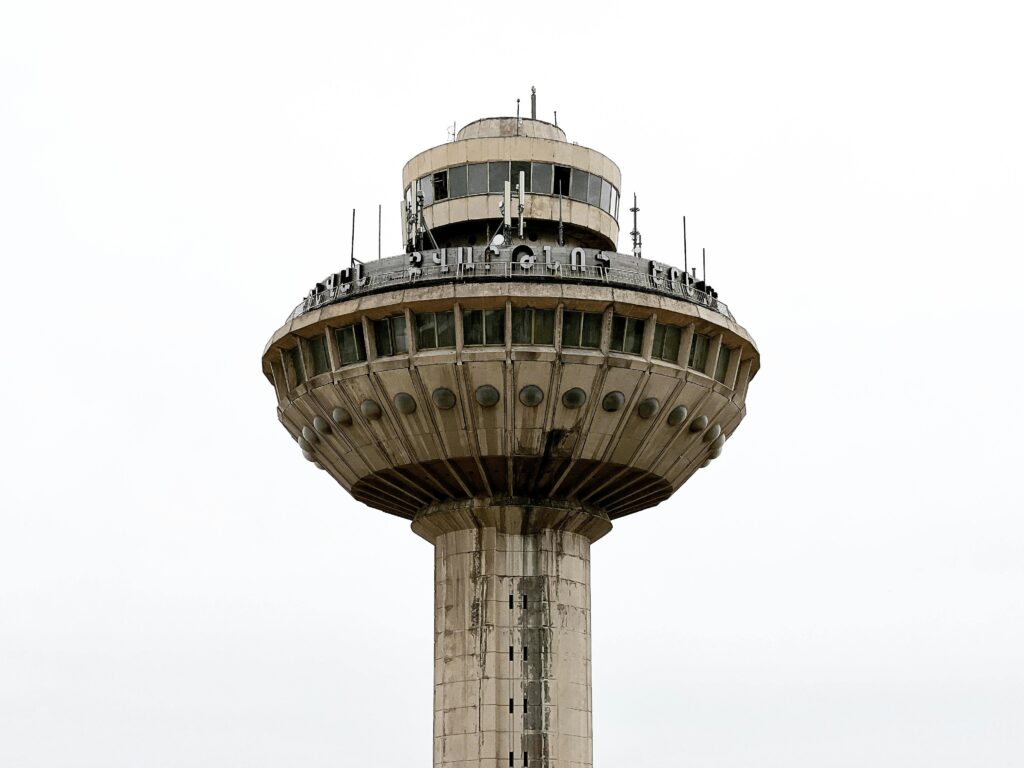
Have you ever wondered how pilots actually communicate with Air Traffic Controllers (ATC)? Does the airplane have a phone? Or maybe its done by some sort of texting?
Primary means of communication is done through some antennas that you may have already seen while patiently waiting in the VIP lounge of the airport enjoying your hot coffee on a cold winter day with lots of delays.
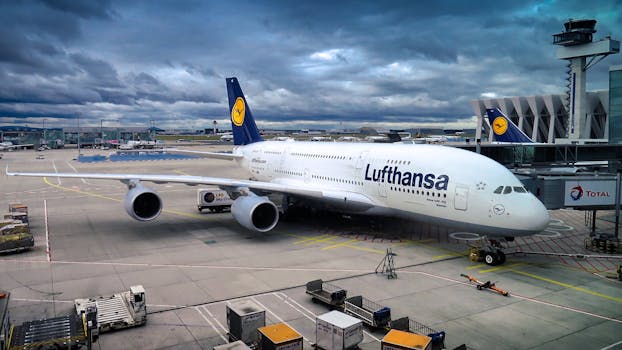
These antennas are often located on the top and bottom of the aircraft structure and they are usually looking like a small fin.
The aircraft may have usually 3 of these antennas. Pilots inside the cockpit have to use their headsets to listen to the ATC, but in order to talk they usually press a “scandal” fitted on the control column. So whenever the pilot needs to talk he/she just pressing the scandal, which (at least in a civil trasnport airplane) sends the transmission to the ATC. When he/she releases the scandal, the transmission ends.

So here comes the question of the one million dollars: is there a phone in the aircraft, or can pilots use their own phones in order to communicate with ATC?
The answer is yes. But that is usually the last resort, when contact with ATC through common means cannot be achieved, the pilots can use phone numbers, depicted on charts, to contact ATC, in case of communication failure. Before doing so, the pilot can start troubleshooting, using backup frequencies, checking their systems and so on. If everything fails then the phone can be another means of communication. Even in case of complete breakdown of communications, procedure have been established in order to make the airplane path predictable.
Imagine the following: you are an ATC talking to alot of airplanes at the same time, and suddenly you cannot reach one. That sounds scary, because in theory this airplane is not subject to your commands, for spacing and separation, the next movement could be unpredictable. In order to have this predictability, procedures called “Lost communication procedure” are specified usually for every airport, that the airplane has to follow in order to avoid complete chaos in an airpsace, like a bee wandering around in a room full of people.
Last question: in a very congested airspace, how can a controller issue so many instructions at a given time?
The problem here, is the basic fact, that when an aircraft is talking on the radios, none else can talk at the same time. That limits the efficiency of communications, especially in a heavily congested airpsace. The solution to this is “text messages” via a technology called “Controller Pilot DataLink Communications”, or CPDLC in short. To make it simple, the controller and the pilot can even talk nowdays, in most airspaces with “text” messages as an addition to the voice, in order to reduce clutter on the radios, improve communications efficiency, and safely increase the capacity of an airspace.